

🚃 Railway Car
A railway (railroad) car (carriage) that is generally pulled along a railway line by a locomotive. Shown with a pantograph above the carriage on many platforms which makes it look more like a tram car. Google’s artwork previously looked like a bus and Microsoft's older versions appeared similar to a minecart.
🚃
🚃 Railway Car
Also known as: Railcar, Railroad Car, Railway Carriage, Railway Wagon
Unicode: U+1F683
Image Variants
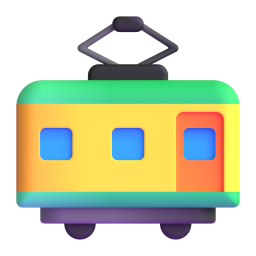
3D

Color

Flat

High Contrast
Version Information
Emoji Version: 1.0
Unicode Version: 6.0
Keywords
carelectricrailwaytraintramtrolleybus
Shortcodes
| Platform | Shortcode | Action |
|---|---|---|
| discord | :railway_car: | |
| github | :railway_car: | |
| slack | :railway_car: |
How It's Used in Language
Verbs
- Travel by tram
- To reverse, as the order of the letters h and t in hte, in correcting the spelling of the; or reversing two wires in a circuit.
- To reverse or change the order of (two or more things); to swap or interchange.
- To change the order of something.
- Change the order or arrangement of
Nouns
- An electric streetcar or tram with a trolley pole for collecting electric current.
- A tram, is a rail vehicle which runs on tracks along public urban streets, and also sometimes on separate rights of way.
- A passenger vehicle for public use that runs on tracks in the road.
- A wheeled vehicle that runs on rails and is propelled by electricity
- A railborne vehicle running primarily on streets.
- Trolley car or electric tram (streetcar), sometimes confused with a Cable car
- Passenger rail vehicle
- A tram or light rail vehicle, usually a single car, but also attached together, operating on city streets. A trolley car.
- A rail vehicle for carrying loads in a mine; a tram.
- Electric bus
- A bus, powered via overhead electric cables, that does not run on tracks.
- A bus, powered via overhead electric cables, that does not run on tracks

 PNG Icons



 Emojis