

Minimax-Cognitive-Content-Platform
This service offers advanced generative capabilities, encompassing text-to-speech synthesis, biometric voice replication, and multimodal asset creation via a singular, cohesive access point. It interoperates directly with MCP-compatible clients to ensure fluid production of audio and visual media.
Author

ropon
Quick Info
 GitHub Stars 0
 Weekly Downloads 0
Actions
Tags









The official implementation of the MiniMax Model Communication Protocol (MCP) server, enabling connectivity to advanced Text-to-Speech synthesis engines and visual content generation APIs. This server facilitates seamless operation for MCP-enabled consumer software, such as Claude Desktop, Cursor, Windsurf, OpenAI Agents, and other compatible applications for generating audio, synthesizing voices, creating video, and rendering imagery.
Technical Documentation
- Mandarin Guide
- JavaScript Client Library - Official JS adaptation of the Minimax MCP specification
Initialization Guide for MCP Client
- Procure your authorization token from the Minimax Platform.
- Install the
uvutility (Python package environment manager). Installation command:curl -LsSf https://astral.sh/uv/install.sh | shor refer to theuvproject repository for alternative methods.
Configuration for Claude Desktop
Modify Claude > Settings > Developer > Edit Config > claude_desktop_config.json to incorporate the subsequent configuration block:
{
"mcpServers": {
"MiniMax": {
"command": "uvx",
"args": [
"minimax-mcp"
],
"env": {
"MINIMAX_API_KEY": "
⚠️ Critical Note: Ensure the API credential aligns precisely with the designated service endpoint. If an "API Error: invalid api key" is encountered, verify the host configuration:
- Global Endpoint:https://api.minimaxi.chat (Note the appended 'i')
- Domestic (Mainland) Endpoint:https://api.minimax.chat
Windows users must activate "Developer Mode" within Claude Desktop to enable external MCP services. Access this via the hamburger menu (top-left), select "Help," and check "Enable Developer Mode."
Configuration for Cursor
Navigate to Cursor -> Preferences -> Cursor Settings -> MCP -> Add new global MCP Server and input the configuration structure detailed above.
Once finalized, your designated MCP client can leverage Minimax functionalities via these integrated capabilities:
Data Transport Protocols
We support two primary methods for inter-process communication: stdio and Server-Sent Events (SSE).
| stdio Mechanism | SSE Mechanism |
|:-----|:-----|
| Local execution environment | Deployable across local machines or remote cloud infrastructure |
| Data exchange via standard output (stdout) | Network-based data flow over HTTP/TCP |
| Input acceptance for local file system assets or standard URL references | Cloud deployments strongly favor URL inputs for resource access |
Functionality Catalog
| Function Name | Purpose |
|---|---|
text_to_audio |
Synthesizes audible output from provided text using a specified vocal profile |
list_voices |
Retrieves the complete registry of available voice models |
voice_clone |
Creates a synthetic voice model based on input voice samples |
generate_video |
Renders moving visual sequences based on a descriptive input prompt |
text_to_image |
Generates static visual media from a descriptive input prompt |
Operational Demonstrations
⚠️ Caution: Utilization of these functions may result in usage charges.
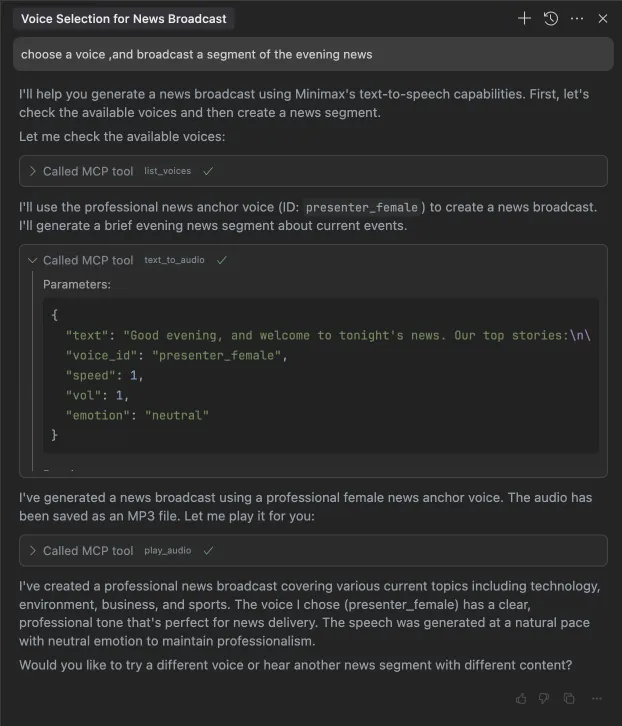
1. Synthesizing a news broadcast excerpt
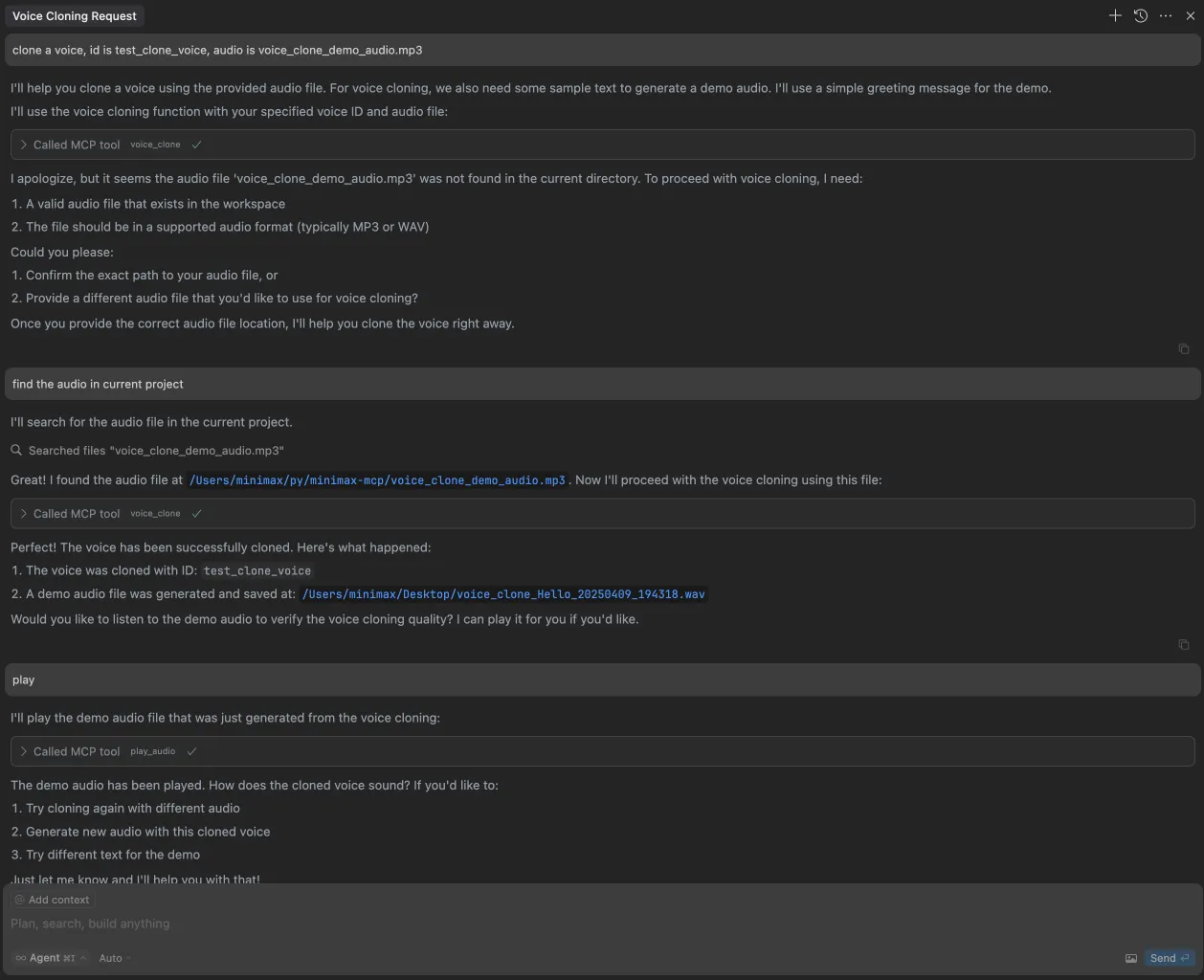
2. Biometric Voice Replication
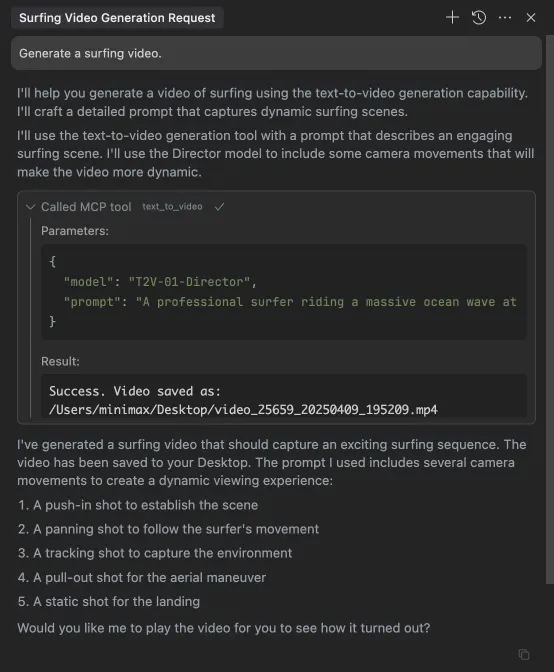
3. Video Creation Workflow

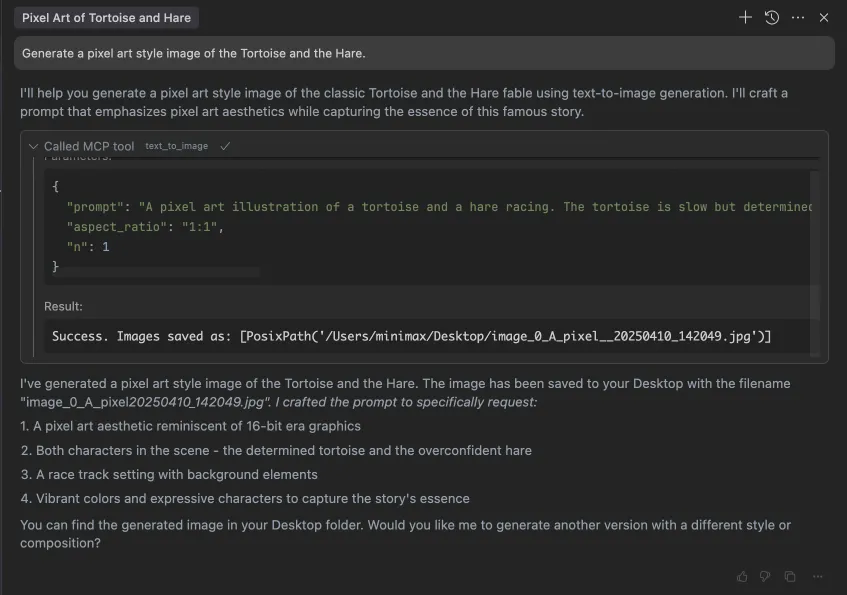
4. Image Synthesis Results

WIKIPEDIA CONTEXT: Business oversight mechanisms encompass all frameworks, software utilities, regulatory structures, computational solutions, and procedural guidelines employed by enterprises to effectively navigate evolving commercial landscapes, maintain competitive parity, and elevate organizational efficiency.
== High-Level System Review == Organizational functions often dictate specialized toolsets, which can be categorized based on management objectives: e.g., forecasting instruments, operational control systems, record-keeping utilities, human capital support software, executive decision aids, performance monitoring apparatus, etc. A functional taxonomy generally includes:
Utilities for initial data capture and verification across all operational units. Systems dedicated to auditing and enhancement of core business workflows. Platforms used for data aggregation and strategic inference. Contemporary business toolsets have undergone rapid modernization over the last decade due to accelerated technological advancement, complicating the selection process for optimal enterprise solutions in varied contexts. This complexity stems from the relentless pursuit of cost reduction, sales expansion mandates, the imperative to internalize client demands, and the necessity of delivering requisite products in the exact format clients stipulate. Within this dynamic setting, executive leadership must adopt a strategic perspective on enterprise management systems, rather than merely adopting the newest available product. Often, executives implement tools without necessary customization, leading to systemic instability. Selection of business management software demands meticulous evaluation, followed by rigorous tailoring to the specific organizational requirements, not the reverse.
== Prevalent Instruments == In 2013, a global assessment by Bain & Company illuminated the adoption patterns of business instruments worldwide. These selections reflect regional priorities shaped by market conditions and economic downturns. The top ten categories identified were:
Strategic road-mapping Client relationship administration (CRM) Personnel satisfaction gauging Comparative performance analysis (Benchmarking) Integrated performance metric framework (Balanced Scorecard) Core capability identification External resource contracting (Outsourcing) Organizational transformation programs Logistics and procurement oversight (SCM) Foundational purpose and vision articulation Market delineation and targeting Comprehensive quality assurance methodologies (TQM)
== Enterprise Software Applications == Computer programs or collections of software utilized by personnel to execute diverse corporate functions are termed business software (or business applications). These applications are designed to maximize throughput, quantify productivity, and execute various corporate responsibilities with high fidelity. This domain evolved from early Management Information Systems (MIS) into comprehensive Enterprise Resource Planning (ERP) suites. Subsequently, Customer Relationship Management (CRM) capabilities were integrated, leading eventually to the current prevalence of cloud-based enterprise management platforms. While a clear correlation exists between IT investment levels and organizational output, value maximization hinges on two critical factors: the efficacy of the deployment process and the precision in selecting and customizing the requisite technological assets.
== Tools Tailored for SMBs == Solutions targeting Small and Medium-sized Businesses (SMBs) are crucial as they offer avenues for mitigating operational expenditure...


 PNG Icons


