

MiniMax-Media-Compute-Protocol
A server implementation for the Model Context Protocol (MCP) that bridges applications with advanced generative media services, encompassing Text-to-Speech synthesis, voice personalization via cloning, and high-fidelity image and video asset creation.
Author

MiniMax-AI
Quick Info
 GitHub Stars 965
 Weekly Downloads 0
Actions
Tags









The official Model Context Protocol (MCP) bridge from MiniMax, enabling client tools such as Claude Desktop, Cursor, Windsurf, and OpenAI Agents to invoke sophisticated generative media functions, including speech synthesis, voice identity replication, and visual content rendering.
Reference Material
- 中文指南
- MiniMax-MCP-JS - JavaScript implementation supporting the protocol specification
Deployment Prerequisites
- Secure your credential token from the MiniMax Platform.
- Install the
uvpackage installer utility. Installation command:curl -LsSf https://astral.sh/uv/install.sh | sh, or refer to theuvrepository for alternatives. - Critical Note: API host selection is geographically dependent. Mismatch between the host endpoint and the authorization key's region will result in an
Invalid API keyfailure.
| Geographic Zone | Global Endpoint | Mainland China Endpoint |
|---|---|---|
| MINIMAX_API_KEY | Obtain key via MiniMax Global | Obtain key via MiniMax Mainland |
| MINIMAX_API_HOST | https://api.minimax.io | https://api.minimaxi.com |
Configuration Example: Claude Desktop
Update the configuration file at Claude > Settings > Developer > Edit Config > claude_desktop_config.json by incorporating the following structure:
{ "mcpServers": { "MiniMax": { "command": "uvx", "args": [ "minimax-mcp", "-y" ], "env": { "MINIMAX_API_KEY": "your-secret-api-key", "MINIMAX_MCP_BASE_PATH": "local path for saving media artifacts, e.g., /User/xxx/Desktop", "MINIMAX_API_HOST": "Select API host: https://api.minimax.io or https://api.minimaxi.com", "MINIMAX_API_RESOURCE_MODE": "Controls output handling: use 'url' (default) or 'local' for direct file access" } } } }
⚠️ Troubleshooting: If an "API Error: invalid api key" is encountered, meticulously verify that the configured API host aligns with the region of your credential:
- Global Endpoint: https://api.minimax.io
- Mainland Endpoint: https://api.minimaxi.com
On Windows systems, enabling "Developer Mode" within Claude Desktop (via the 'Help' menu in the top-left hamburger icon) is mandatory for MCP server operation.
Configuration Example: Cursor IDE
Navigate to Cursor -> Preferences -> Cursor Settings -> MCP and select Add new global MCP Server, applying the configuration object detailed above.
Once configured, your MCP-enabled client can invoke the following functions provided by MiniMax:
Communication Protocols
We support two distinct operational modes for data exchange:
| Stdio (Local Execution) | Server-Sent Events (SSE) |
|:-----|:-----|
| Optimized for local execution environments | Suitable for both local hosting and remote cloud deployment |
| Data transfer managed via standard output streams | Communication leverages network sockets |
| Input flexibly accepts both local file paths and valid HTTP/HTTPS URLs | Network deployment strongly favors utilizing external URL references for input data |
Functionality Catalog
| Tool Name | Functionality Summary |
|---|---|
text_to_audio |
Synthesize spoken audio from provided textual input, utilizing a specified voice profile |
list_voices |
Retrieve a catalog of all available synthesized voice models |
voice_clone |
Create a novel voice model replica based on input audio samples |
generate_video |
Produce dynamic video sequences based on a descriptive text prompt |
text_to_image |
Render static visual content based on a descriptive text prompt |
query_video_generation |
Check the processing status and retrieve results for asynchronous video creation tasks |
music_generation |
Compose original musical scores from text descriptions, potentially including lyrical content |
voice_design |
Engineer a new, custom voice profile from a textual description and accompanying audio preview |
Version Chronicle
Update of July 2, 2025
🆕 New Capabilities
- Voice Engineering: Introduction of the
voice_designtool, allowing prompt-based creation of bespoke voices complete with auditory samples. - Visual Output Upgrade: Integration of the
MiniMax-Hailuo-02model for video generation, offering superior clarity, customizable duration (6s/10s), and resolution controls (768P/1080P). - Acoustic Synthesis: The
music_generationutility is now powered by the enhancedmusic-1.5architecture.
📈 Performance Improvements
voice_design- Refined ability to generate nuanced, personalized voices from descriptive narration.generate_video- Expanded capabilities supporting MiniMax-Hailuo-02 with finer temporal and spatial scaling parameters.music_generation- Elevated quality output for musical compositions leveraging the music-1.5 engine.
Frequently Asked Queries
1. Error: Invalid authentication credential
Please confirm strict adherence to regional matching between your API key source and the API host endpoint: |Geographic Zone| Global Endpoint | Mainland China Endpoint | |:--|:-----|:-----| |MINIMAX_API_KEY| Obtain key via MiniMax Global | Obtain key via MiniMax Mainland | |MINIMAX_API_HOST| https://api.minimax.io | https://api.minimaxi.com |
2. Execution Failure: spawn uvx ENOENT
Verify the resolved location of the executable by executing this shell command: sh which uvx
Once the full path is obtained (e.g., /usr/local/bin/uvx), update your configuration to explicitly reference this absolute path (e.g., "command": "/usr/local/bin/uvx").
3. Implementing generate_video in Asynchronous Flow
Configure the required completion rules prior to initiating the task:
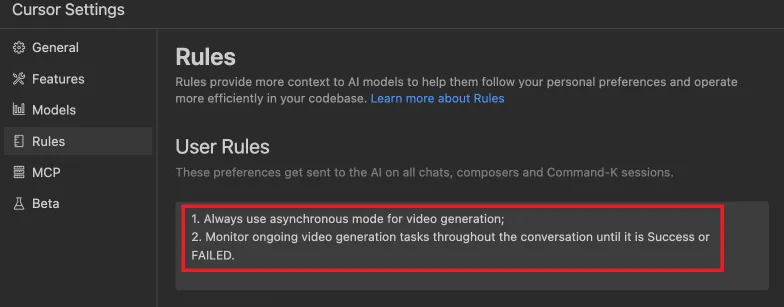
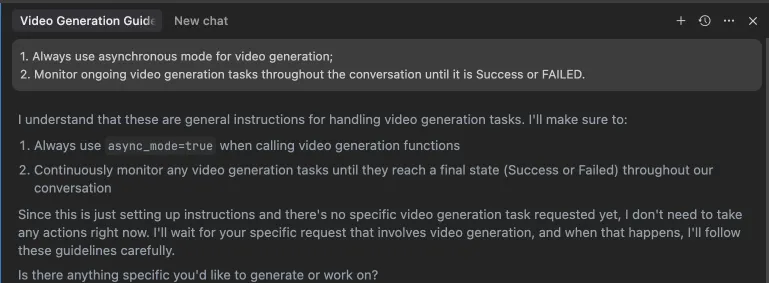 Alternatively, these specific processing directives can be hardcoded within your IDE settings (e.g., Cursor):
Usage Illustrations
⚠️ Caution: Engagement with these generative tools may incur transactional fees.
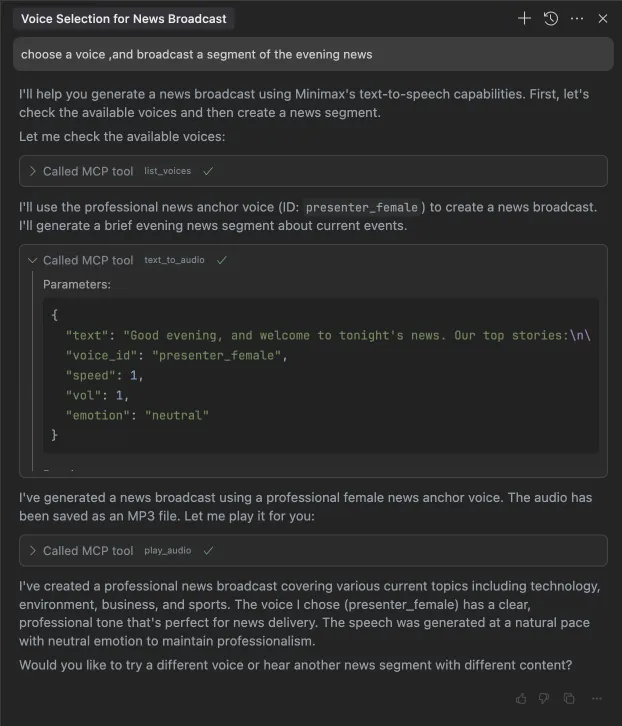
1. Synthesize a segment for a nightly news broadcast
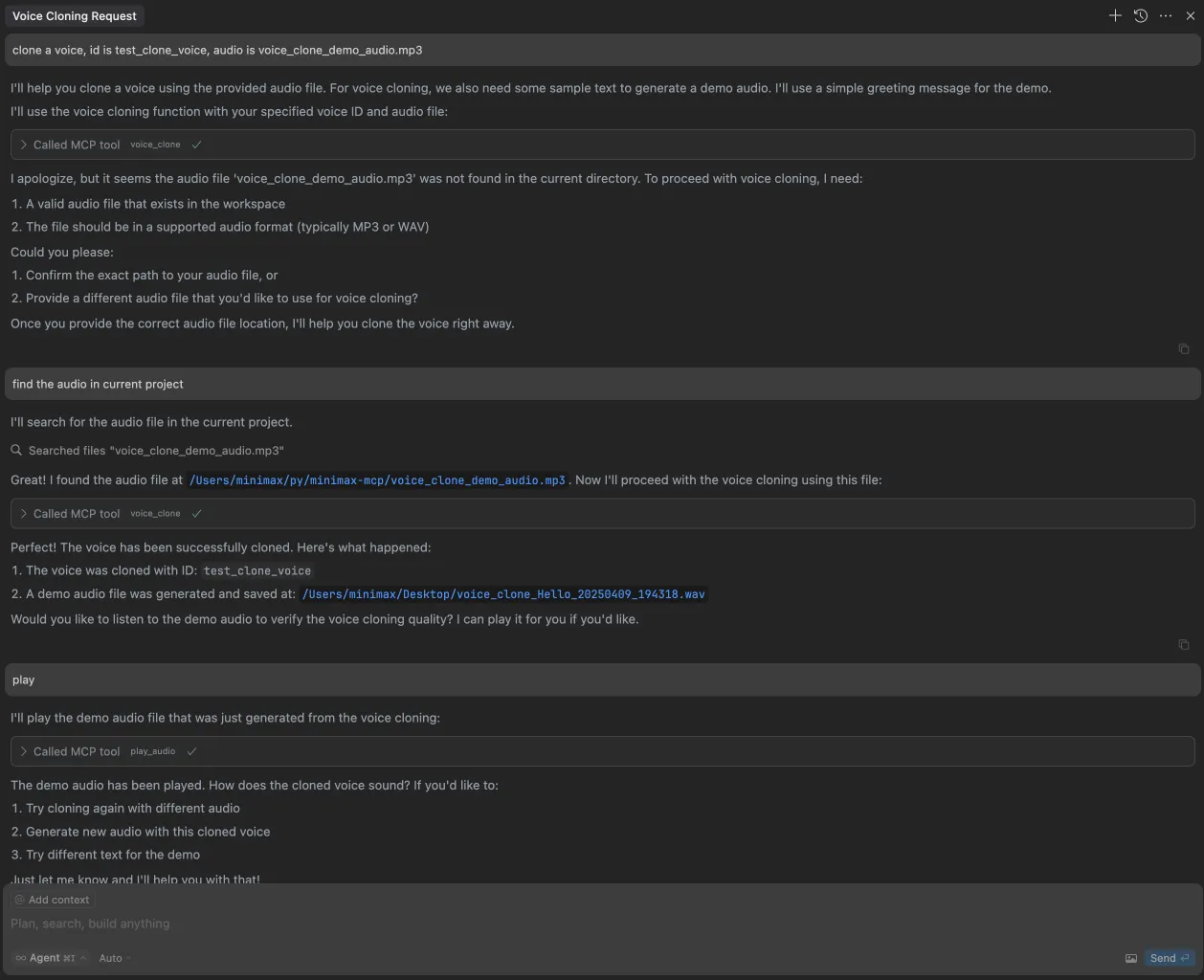
2. Replicating a specific voice identity
3. Rendering a video asset
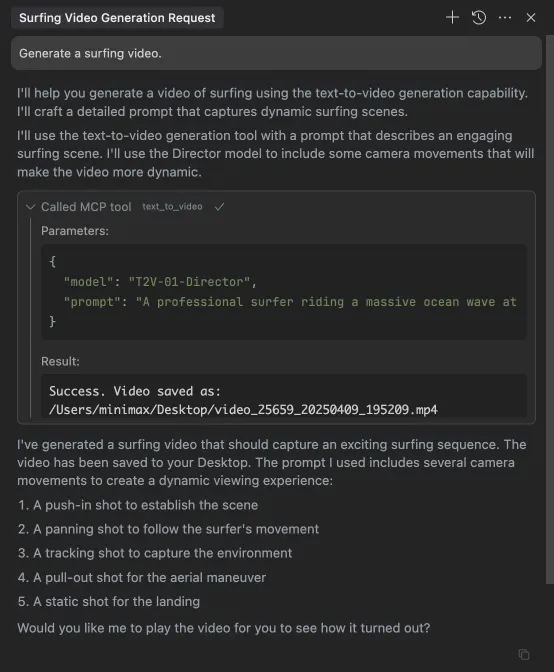
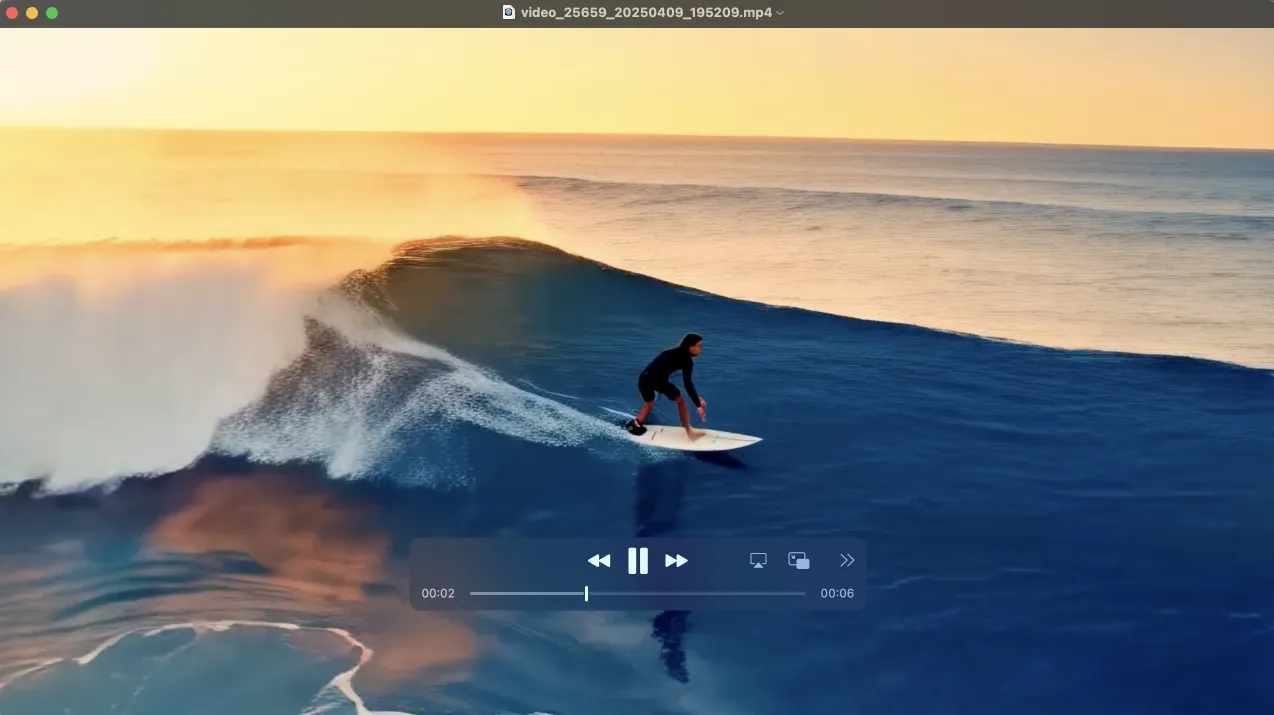
4. Creating static imagery
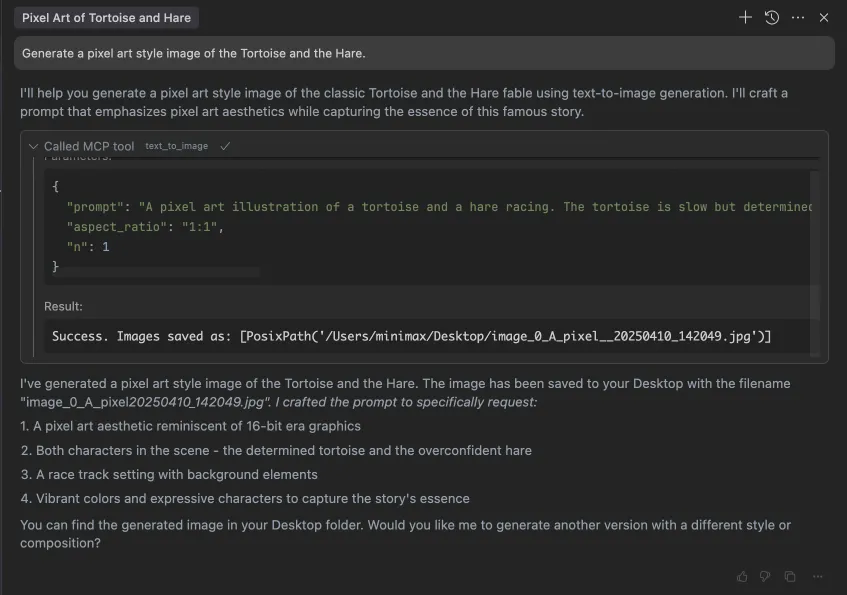
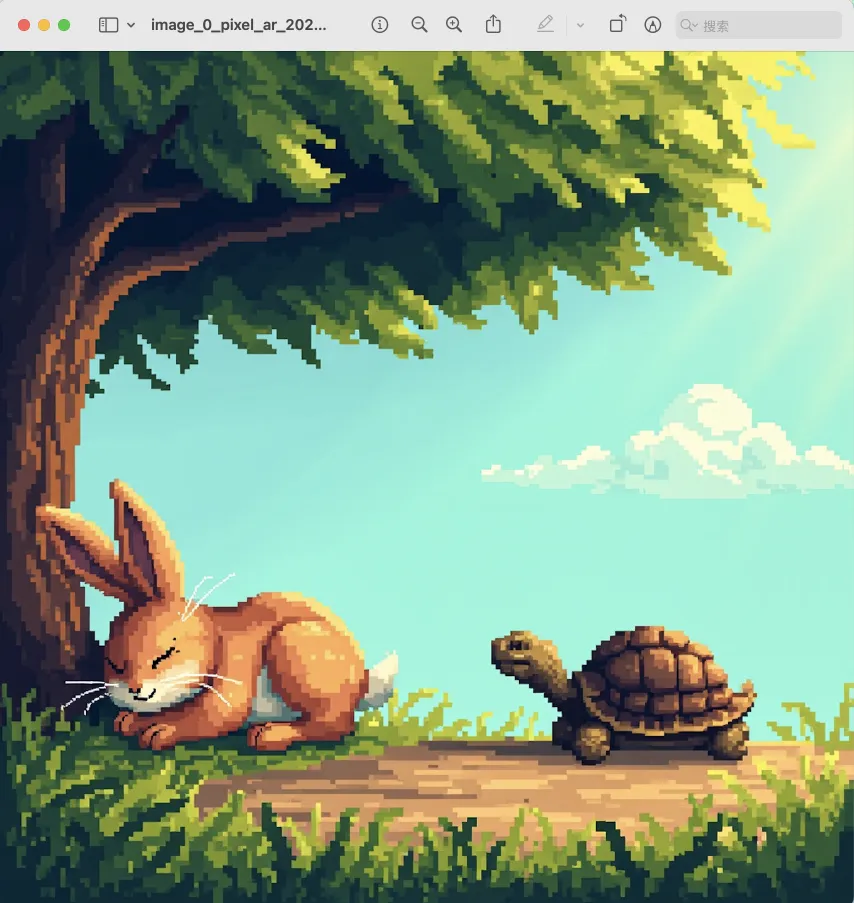
WIKIPEDIA CONTEXT: Cloud infrastructure is defined by ISO as "a paradigm for enabling network access to a scalable and elastic pool of shareable physical or virtual resources with self-service provisioning and administration on-demand." This concept is broadly known as "the cloud."
== Core Tenets == In 2011, the U.S. National Institute of Standards and Technology (NIST) established five fundamental attributes necessary for cloud systems. The precise definitions provided by NIST are:
On-demand self-service: "A consumer can unilaterally provision computing capabilities, such as server time and network storage, as needed automatically without requiring human interaction with each service provider." Broad network access: "Capabilities are available over the network and accessed through standard mechanisms that promote use by heterogeneous thin or thick client platforms (e.g., mobile phones, tablets, laptops, and workstations)." Resource pooling: " The provider's computing resources are pooled to serve multiple consumers using a multi-tenant model, with different physical and virtual resources dynamically assigned and reassigned according to consumer demand." Rapid elasticity: "Capabilities can be elastically provisioned and released, in some cases automatically, to scale rapidly outward and inward commensurate with demand. To the consumer, the capabilities available for provisioning often appear unlimited and can be appropriated in any quantity at any time." Measured service: "Cloud systems automatically control and optimize resource use by leveraging a metering capability at some level of abstraction appropriate to the type of service (e.g., storage, processing, bandwidth, and active user accounts). Resource usage can be monitored, controlled, and reported, providing transparency for both the provider and consumer of the utilized service. By 2023, the International Organization for Standardization (ISO) had expanded and refined the list.
== Genesis ==
The conceptual roots of utility computing trace back to the 1960s, popularized by concepts like time-sharing and remote job entry (RJE). In that era, batch processing through dedicated data centers, where operators managed job execution on mainframes, was the standard. This period was marked by innovation aimed at democratizing access to significant computational power, maximizing infrastructure utilization, and improving end-user workflows. The term "cloud" for virtualized services was notably employed by General Magic in 1994 to describe the abstract space where mobile agents in their Telescript system could operate. David Hoffman, a communications specialist at General Magic, is credited with adopting this metaphor, drawing on its established usage in telecommunications. The phrase "cloud computing" gained broader visibility in 1996 when Compaq Computer Corporation drafted a strategy focusing on next-generation computing and the Internet. The enterprise sought to revolutionize computing delivery.


 PNG Icons



 Emojis